
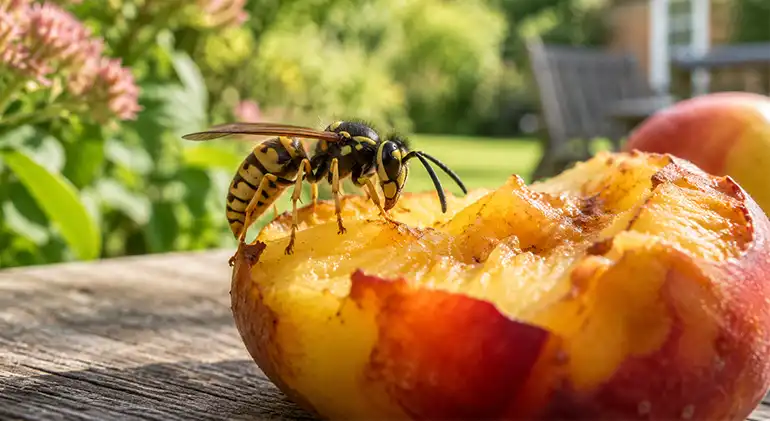
Wasps often become more noticeable around London during late summer and early autumn, particularly in August and September. At this stage of the season, established colonies contain large numbers of workers, while their behaviour begins to change as the colony reaches maturity. Adult wasps spend more time looking for sugary food sources, which can bring them into closer contact with people around gardens, bins, outdoor dining areas, ripe fruit and sweet drinks.
Seeing more wasps does not automatically mean there is a nest on your property. Individual wasps may simply be foraging nearby. However, repeated activity around the same opening, roof edge, wall cavity, shed or other fixed point can be a stronger sign that a nest is close by. Understanding the difference can help you respond sensibly without treating normal seasonal activity as a pest problem.
Why Do Wasps Become More Noticeable in Late Summer?
By late summer, a wasp colony has usually developed far beyond its smaller spring stage. At the same time, the role of many worker wasps begins to change. Instead of spending as much time gathering food for developing larvae, they increasingly search for easily available sources of sugar. This combination can make wasps much more obvious around homes, gardens and outdoor spaces.
What Changes Inside a Wasp Colony as Summer Progresses?
Earlier in the season, worker wasps spend much of their time supporting the nest and feeding developing larvae. As the colony matures and fewer larvae need feeding, that pattern begins to change. Adult wasps still need energy, but they become less tied to the nest and more likely to search elsewhere for sugary food.
That is one reason they are often seen around ripe or fallen fruit, sweet drinks, food waste and outdoor eating areas towards the end of summer. It can make wasps seem unusually persistent, but this behaviour is part of their normal seasonal cycle rather than a sign that they are automatically becoming aggressive.
Does Seeing More Wasps Mean There Is a Nest Nearby?
Not necessarily. A few wasps around flowers, fruit, bins, food or drinks may simply be foraging. Wasps can travel some distance from their nest while searching for food, so occasional activity around a garden, patio or outdoor seating area does not automatically mean a nest is on the property.
What matters more is the pattern of movement. If wasps are repeatedly flying to and from the same fixed point, such as a gap beneath roof eaves, around a fascia, into a wall cavity or another sheltered opening, this can be a stronger sign that an active nest is nearby. If you notice this type of regular traffic, it is best to observe from a safe distance rather than getting close or trying to investigate the area yourself.
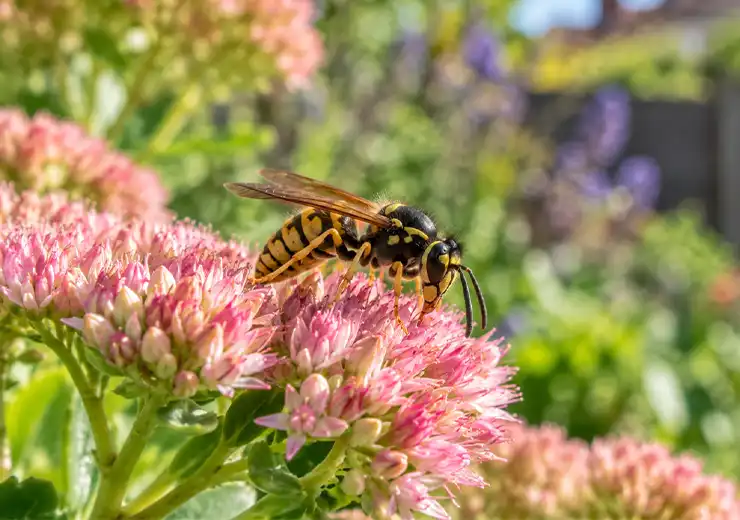
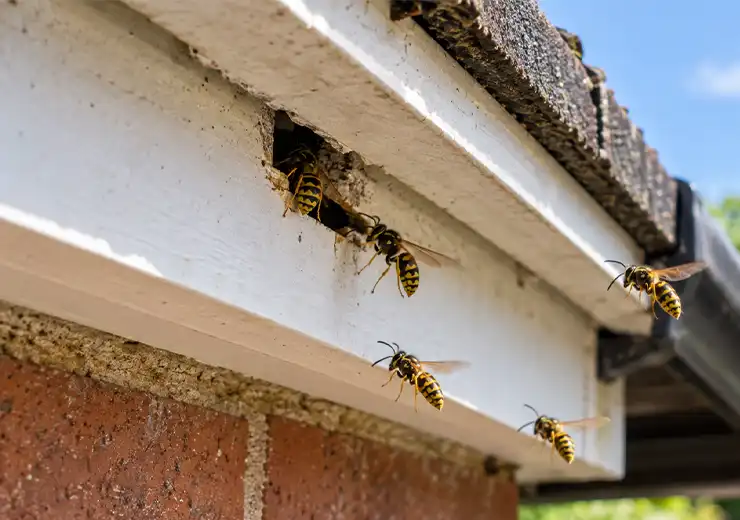
Repeated wasp traffic into and out of the same opening is a stronger sign of a nearby active nest than simply seeing individual wasps outdoors.
Source: Coventry City Council, wasp season guidance
What Can You Do About Wasps Around Your Property?
If wasps are simply foraging outdoors, a few practical steps can make the area less attractive to them. Keep sweet drinks and food covered where possible, clean up spills promptly, make sure outdoor bins are properly closed, and remove fallen or over-ripe fruit from gardens and outdoor spaces.
If you suspect a nest nearby, avoid disturbing the area or getting close simply to confirm it. Repeated traffic to and from the same opening can often be observed from a safe distance. Do not block an active entrance or attempt to interfere with the nest, as this can increase the chance of disturbing the colony.
For occasional wasps around flowers, food or fruit, professional treatment is not normally necessary. The important distinction is whether you are seeing normal seasonal foraging or regular activity linked to a fixed nesting point. If a wasp sting causes difficulty breathing, swelling of the mouth or throat, or other signs of a severe allergic reaction, call 999.
When Might a Wasp Nest Need Professional Attention?
Not every wasp sighting needs professional treatment. However, if there is clear evidence of an active nest in a location where people are likely to come into close contact with it, professional attention may be the safer and more practical option.
Where an active nest is causing a problem, Rapid Services provides <Wasp Nest Removal as part of its Pest Control Services in London. The service reference should remain secondary to the advice above, because normal outdoor wasp activity does not automatically mean treatment is needed.<
Knowing When Wasp Activity Is a Problem
Wasps becoming more noticeable in late summer and early autumn is a normal part of their seasonal behaviour. In many cases, a few wasps around flowers, fruit, food or bins are simply foraging and do not indicate a nest on the property.
The situation is more likely to need attention when there is repeated activity around the same fixed point, particularly if that point is close to an entrance, seating area or another part of the property that people use regularly. In those circumstances, avoiding disturbance and seeking professional advice can be the sensible next step.
Rapid Services offers Wasp Nest Removal within its wider Pest Control Services for London properties where an active nest is causing a genuine problem. The aim should always be to respond appropriately to the situation rather than treating every wasp sighting as an infestation.